On Feeling Behind as an Herbalist
Or – I thought I would be further along in my herbal career by now
It’s spring*.
*pssst…this was first written early April
Spring means many things. The flower bloom, birds return, the days are brighter and longer.
And also… taxes.
My taxes were relatively quick to do this year. Because there’s such little substance to them.
I’m satisfied to be done with them, but I also feel…shame. Grief. Disappointment. Frustration. Loneliness.
I started studying herbalism in 2002 and in Dec 2005 took my first baby steps into clinical professional territory. I’m now 20+ years into my so-called “herbalist career”, and I’m nowhere near where I’d thought I’d be by now.
It’s time I took a good hard look at this so called herbalist job I’ve wanted to have for over 20 years. That’s what this blog entry is about. A big part of me is afraid that this will be perceived as complaining. Maybe it’s unnecessary? Oversharing? Whining? Being a victim?
I think:
“I know what I need to do to get my herbalist business ahead, and I know all the reasons why I am behind. I just need to systematically tackle my to-do list and things will be fine. I always knew this path wasn’t going to be easy, so what did I expect?”
and I also think
“Is it really a big deal that my business is failing? The most important and rewarding part of being an herbalist is the relationships to the plants and herbalism, and I am appreciative of what I HAVE created and for the wonderful people I HAVE worked with – that is what makes it worth it.”
Both of these statements are true.
But there’s much more held within my relationship to my dreams. All I wanted was to be a clinician and to do herbal scholarship, and create and share a body of work (you could call that teaching, I suppose). If I am not where I want to be, then couldn’t it be easily healed in a simple “adjustment of my exceptions” or ploughing through a to-do list?
Believe me, if those were easy fixes, I wouldn’t be talking about this!
Instead, I think it’s time to talk about this weight of disappointment. The sack full of bad feelings I carry around. Of feeling behind.
And we should talk about the fact that what I am feeling isn’t unique to me. People of ALL AGES are struggling with this economy and have been for a long time, and that feeling behind is a way of life for many Millennials and Zoomers.
At this point I don’t have particular advice for how to move forward or even how to cope with the feeling of being behind in life. But that’s not what this about.
I mostly want to elucidate why being behind as an herbalist is disappointing to me. Sometimes I think herbalists and acupuncturists (I am also an Acupunturist and do Chinese medicine/herbs) are idealistic type people, who want so much to give and help that we don’t talk about the hard parts of executing dreams. We don’t talk about how it feels when your job doesn’t have a good return on investment.
Sometimes I think we even lie to ourselves about just how hard it can be to get ahead. Or we ignore or avoid “going there”. This is what is happening in the acupuncture community currently! Schools are closing left and right and the ones who still stand may lose access to federal student aid.
But generally, I’d like to think we have the potential to see reality and how it affects us. We are holistically minded empathetic people. We see our clients struggles, we validate their experiences and understand how stress can impact one’s well-being…why not do this to ourselves as herbalists?
Being an herbalist… a lovely, but hard path
In accepting the call of wanting to be an herbalist, many* of us drag a financially disempowered weight behind us. You accept the path. And you accept the burden…which is probably not making enough money to survive let alone thrive.
*I want to acknowledge that not every herbalist or acupuncturist is struggling to get the type of business they want/need or financially. There are many very successful people out there! I’ve seen it with my own eyes! But many, if not most, of us are not doing as well as we’d like/need.
We hardly ever look at or talk about the financial burden. Again, that is what I want to do in this essay.
To start out, I want to ask some questions and define terms.
HERBAL CAREER SELF-REFLECTION QUESTIONS
To start diving into this discussion, let’s ask ourselves:
What does it mean to be an herbalist?
What led you to want to be an herbalist?
Do you want to be an herbalist as a career, even a part-time career?
If so, what does that career look like?
This kind of bugs me, but I am going to answer my own questions out of order.
I want to center the mundane, practical, financial aspects of an herbalist career first, then work backward into a more granular and idealistic discussion about what it means to be an herbalist.
What an herbalist career looks like to me:
Why yes, I DO want to be an herbalist as a career 🙂 and I am most drawn to:
1) Being a clinical herbalist
and
2) Teaching ie. creating a body of work and writing/sharing about it with others
Again, I should mention I am an acupuncturist and Chinese medicine practitioner, and acupuncture is a supportive force behind my clinical herbal practice. I thought studying Chinese medicine would help me in a career of being a clinical herbalist, which it does to a certain point – I’m glad to have acu as a service to offer – and also I just like it a lot 🙂
Essentially, I believed being an acupuncturist would help me have an even more of a chance at being an herbalist.
Hanging out at the drug store: first introduction to what a practitioner does
There’s just something about working with someone: listening, observing, investigating and then problem solving and strategizing to help people find a way forward with their health when they are confused that feels very rewarding to me.
As a little kid, I remember wanting to be a pharmacist, and at face value, I thought that was because I loved going to the drug store in my small home town – Tangens. I was a townie in 3rd to 5th grade, and went there a lot when I lived like 200 feet from the store. Some weeks I went there daily. Tangens had Sanrio Hello Kitty stuff, it had cute kicknacks, funny Hallmark cards, stationary, art supplies, little toys, and it had the good candy. Chupachups!
But then I recalled a different memory. I remember seeing the pharmacist come out from behind the counter and talk to an old man about some sort of medicine he was giving him or about his health. The quality of the interaction intrigued me.
The pharmacist was helpful to someone who was unsure and needing clarity. He provided a remedy and told him how to use it…actually, I don’t know what he said to the old man, but it was some sort of sharing of helpful information. The old man perked up, he seemed…I don’t know…less lost and confused. More hopeful and empowered. Confident. He seemed okay. He walked away looking like “I can DO this” or maybe it was “maybe my health issue will be better now”.
That interaction impacted me. I couldn’t hear what they were saying, but I could see and feel the energy shift, and the conversation and support were the special ingredients.
Merck Manual Self Help for my chronically sick self
Then in high school I was kind of obsessed with the Merck Manual. These were the days before WedMD, if you wanted to be a hypochondriac you would page through home heath manuals or books from the library…j/k.
I was quite chronically ill in a variety of ways – acutely ill, too – and I went to the doctor a lot. The doctor was quite busy and I could tell he didn’t have a lot of time to figure out what was wrong with me (from my teenaged thinking). In fact, he could hardly listen to my handful of questions…I’d run after him and ask him questions in the hall. So I thought I would read a bunch of health books and see if I could figure things out on my own.
I naively thought that if you just searched hard enough, you could find the reason something was off with your health, then apply the specific medicine for that issue. And then be all better.
Incidentally after years of trying, I never really found the type of answers I was seeking in the Merck Manual. I never really found the reasons why my health was bad, either. Chronic illness doesn’t really fit the mechanistic model, but I didn’t really understand that at the time.
I was also looking for help with my dysmenorrhea (terrible, debilitating pass out from pain menstrual cramps), which to this day is still a highly under-researched and underfunded area of medicine. We’ve cured male baldness! But so little has been done with menstrual cramps.
Through all this, I would read other areas of the Merck Manual and found them interesting, too. So when I was about 18, I thought I would go into medicine.
Too sick for med school…needed something slower
The problem was that I was chronically ill, although I never ever thought of myself as such at the time.
It’s hard to explain…but chronic illness wasn’t really talked about much back them. I heard a few people say they had fibromyalgia, which was relatively new at least in common parlance, or maybe chronic fatigue syndrome or myalgic encephalitis. When I was 12 a doctor said I had chronic fatigue syndrome after I had a Bartonella infection (without giving me a test., an official diagnosis or work up – just a label no other doctor believed) but unless someone was bedridden disabled with those, you weren’t really considered sick.
Kind of like how we now understand the autism spectrum…back then the people who we saw with autism were mostly nonverbal and not able to function without constant support, while now we know there can be very high functioning people on the spectrum. Temple Grandin was seen as an amazing exception of someone with autism who could talk.
So for me, even though I didn’t call myself chronically ill, after a couple years of being pre-med in college I KNEW that I’d never ever make it through med school. I was much much too sick for that.
For a while I considered being a nurse practitioner, which in Wisconsin can deliver babies, and I was a birth doula, but in the end those areas are not much better for a chronically ill person than being a medical doctor.
My first decoction set the stage for my herbalist dreams
WORKED AT AN ACUPUNCTURE AND HERBAL CLINIC
In 2002 I made my first herbal decoction. From then on, I was hooked.
I had been super sick at the time for like 7+ months, on-going mono with fevers, terrible sore throat, tonsillitis, bronchitis and pneumonia from antibiotic-resistant mycoplasma pneumonia.
A friend told me I should go see the new acu herbalist in my small Minnesconsin hometown, and she formulated a decoction for me. I remember Oregon Grape, Echinacea, Burdock, Dandelion and Rose Hips in it, probably Licorice too.
The decoction felt heavenly on my raw throat and tonsils. My immune tissue in there ate that tea up and felt comfort for the first time in many years. For real, I had been constantly sick like this since I was in 8th grade, that’s when I started to have continual sore throats. I was so blown away by how good I felt that I started to work for her.
It was ironic to feel moments of comfort with the herbs, because unbeknownst to me, at this time in 2002-3 when I had just turned 20, my third year of college, I was in a major Lyme flare and suffering in so many ways, especially from side effects long term antibiotics.
I had narcolepsy, sleep paralysis, severe insomnia while developing medium and psychopomp abilities where dead people followed me around and wanted help being passed over, systemic yeast overgrowth from vaginal vault to the brain which drove me absolutely nuts with the irritation, burning heat, itching and die off, and tons of other symptoms like 2-3 bad colds/flus/sore throats/lung infections a month.
Isn’t it funny that I was having an existential health crisis at this same time I discovered herbalism and Chinese medicine (of which I was doing a lot of moxa)? It felt almost supernatural, or like I was guided there.
Very quickly I was convinced this was what I wanted to do with my life. This was it – this is what I’ve been searching for. This was my path.
Herbalism and Chinese medicine – a good fit for me
Right away when I discovered herbalism and Chinese medicine, I could see and feel they were more my pace. And also very much up my alley in their philosophy, which is ironic because I was anti-herbalism in high school and on quack watch email lists against acupuncture (!), which is another story for another time.
Firstly I loved the sensory aspects of both medicines. I loved making teas and harvesting and bathing in herbs…and I loved the hands-on body centered tactile nature of acupuncture and Chinese medicine.
I also observed that herbs and acupuncture were well suited for those types of health situations where the doctors couldn’t do much, when you just had to grin and bear it, or when you tried everything and it didn’t work the way it would ideally, which I personally felt were needed.
Another level of respect and resonance for herbalism was because I had been interested in other cultures and history since being a little kid, and my major was cultural anthropology which included medical anthropology and ethnobotany.
Working in a busy herb and acu practice
Dina was an acupuncturist and western herbalist. I worked on and off at her clinic for 4 years, and then when I was in acupuncture graduate school, I did 2 observation shifts with her. So I was a witness to her business and practice for 10 years.
What did I see? She saw 6-8-12-16 clients a day. Fully stocked herbs of multiple kinds, complex protocols for complex health problems. She was busy!
Sometimes I mention this to peers, when we are complaining about how slow business is. I say, “My. Mentor sometimes saw 16 people a day! And she did no marketing”. Sometimes the response is that “ugh why would she do that, that is too many” – but the thing to remember about Dina is that she was in an underserved area. People showed up in her clinic for help and she accommodated. It was not at all a part of Boss Girl Hustle get-as-many-people-in-the-door-as-possible scheme. Which some people do do. Like those auto accident practices.
Also Dina didn’t bill insurance, so it wasn’t about getting as many billable units of acupuncture needs as possible, or getting people in and out like a revolving door. That’s kind of the modern “hustle” practice model we see in the area where I live nowadays.
She gave long treatments, often front, back and massage of some sort, offered herbal formulation and protocol building, took detailed care notes of someones health. She had 3 treatment rooms sometimes, or at least 2, so she could overlap people easily without rushing to get a room cleaned up and people out the door.
When I graduated acu school, I asked her if she had any marketing tips about starting a practice and getting clients. She said “just put out your shingle and watch people come in the door, and within a short time your books will be full”.
HA!!!! As if that could only be true here in Portland!
Dina was one of the only – if not the only – acupuncturist herbalist in a 3 county area. I looked back at the population of her market in 2005 and there was about 140,000 people in that area.
However… I live in the most saturated market
In comparison, I live in probably the most saturated acupuncture market in the country, one of the most herbal medicine/ND saturated markets too. There are 760 acupuncturists in Multnomah county where I live here in Portland, OR, which makes about 1 LAc for every 1100 people. And if you consider only 10% of people even get acu, thats a market share of 110 people.
My mentor’s 2005 market share: 140,000
Me 2025 market share: 1100
I shouldn’t let this get me down. Numbers don’t represent real life.
There are plenty of practitioners here that do well. I used to do much much better in the first place I worked, back in 2015-2016. Even with myself, I had 20x more business then…for reasons I don’t want to get into now, it was a better, busier place that offered more clients. So I know it’s possible to do okay here, maybe just harder at times.
It was a funny thing, seeing Dina’s practice.
Even though I knew Dina was in a sweet spot, and that her situation was rare, and that I would never have such an easy time filling my practice by me staying in Portland, seeing and feeling the hustle and bustle of what she created had an impact on me. It set the mold.
I knew without a doubt if I wanted to fulfill the dream of being a bust practitioner, I should move to a location that needs LAc’s and herbalists more. But it is – and was – just not that easy for me and my husband. He needed to stay in the Silicon Forest for his job, it was the only place for him to have a job like he did.
Uncertain times, Under-earning in inflation, and worse off generations as Millenials and Gen Z
Funny that since the pandemic and acceptance of remote working, my husband Rob could now work from home from just about anywhere, and thus enable us to move… but NOW his entire field is in a recession.
It boils down to immense economic uncertainty that makes it not an easy or wise decision at this point to sell our house and buy or rent somewhere else. We bought our house in 2016 and refinanced when interest rates hit a low in 2020. Even though we are under-housed (it’s basically a one bedroom one bathroom house with an attic for a family of 4), we would be stupid to get rid of it. You couldn’t rent a one bedroom apartment for what we pay for our house.
Yes, things are hard for us Millenials, and even worse for Gen Z too. We’ve had so many “once on a life time” economic events happen, and much volatility. We are the first generations in a long time to do worse than our parents.
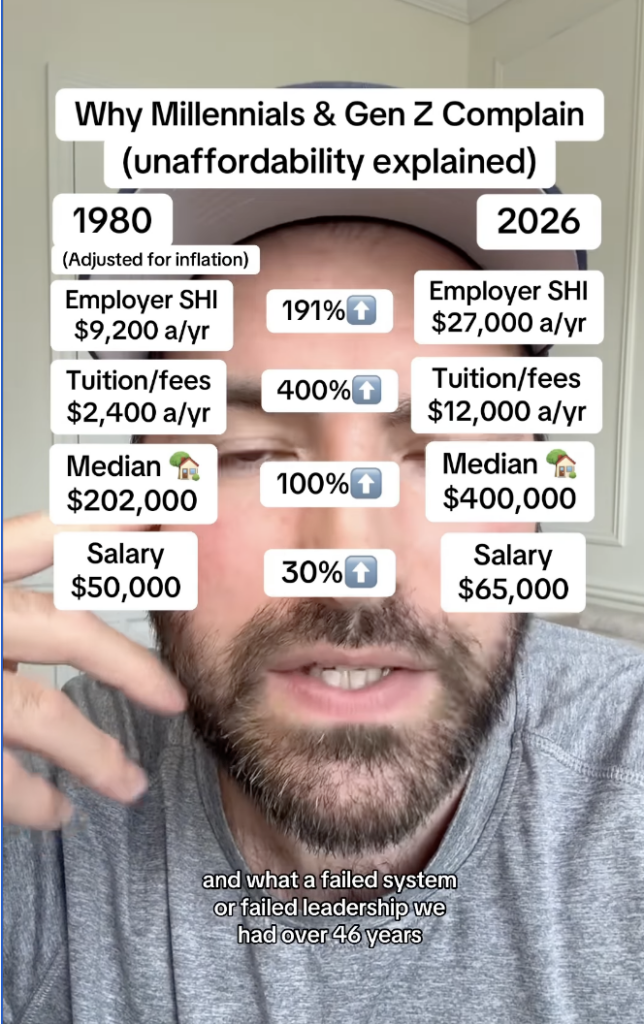
From Freddie Smith’s YouTube channel, which I highly recommend checking out. His banner says, “The Economy, Real Estate, The Future: Just Looking for Answers”.
This is such a biiiiiggggg piece of “why I am feeling behind” conundrum. Simply existing as a Millennial or Gen Z makes you automatically behind.
How the economy impacts our careers as herbalists
Basically, it is harder to afford life AT ALL.
That means:
- Less people can take advantage of our offerings, as they have less money.
- Herbs cost more.
- We as herbalists have less resources to invest in our careers and show up to work (or we go into debt over it), including but not limited to childcare.
- As business owners we may: reduce our prices, absorb costs, cut our own pay, cut our hours, not hire help to support business growth
- Our other jobs take higher precedence than they may of in the past, preventing us from investing in an herbal path.
- In the hyper capitalistic algorithm driven media landscape, health influencers are impeding into herbal territory without being herbalists, herbs become trendy and it messes up the relationship dynamic between people and herbs from a more traditional slow medicine practice to a product slinging trendy thing… I’m having trouble describing this, so maybe we can talk about it later…but basically, herbalists are not the loudest voice in the room and herbs are trendy while herbalism is less nurtured, in my opinion.
- What would you add here??
I wasn’t going to get into my own sob story of some of the reasons my herbal practice is so hard for me to work on, but one example is this:
Because of the lack of childcare opportunities in my area (Multnomah county has 25% availability for infants and babies for people WHO ARE LOOKING…I knew so many people like myself who didn’t even look so it’s even lower… and 45% availability for toddlers and preschoolers), high cost of childcare ($90/day, $2000/mo, or $25 an hour for babysitter/nanny per kid is starting cost), it wasn’t really worth it to have childcare.
Around 2 my kids went to a 2 day a week in home small childcare place. It doubled in price from my first kid to my second, and I wasn’t going to do it but I was super sick with Lyme disease at the time and needed time to rest. Then they went to a preschool a couple days a week, but then it closed and my daughter could only go to a 2 hour 4 day a week preschool…which wasn’t a lot of time for my exhausted self to do much for work.
I know I signed up to have kids. It is my responsibility to care for them. I am willing and able to sacrifice part of my career for that.
I didn’t have the energy to be a stay at home mom AND a work at the same time. I have chronic fatigue and pain…most days I could hardly breathe from dyspnea and had to take 3 naps just to be able to stand up to go to the bathroom.
It’s okay to put your career on hold if you have to take care of your kids. It’s okay to take time off when you are sick too! So it MAKES SENSE that my career isn’t where I thought it’d be, right?
It is perfectly understandable that I didn’t move ahead on my herbal career. I accept this.
It’s just that…guess I just thought… I don’t know… things wouldn’t be so hard.
Not to sound like an entitled baby, but things are hard for us in this age group. Inflation is out of control.
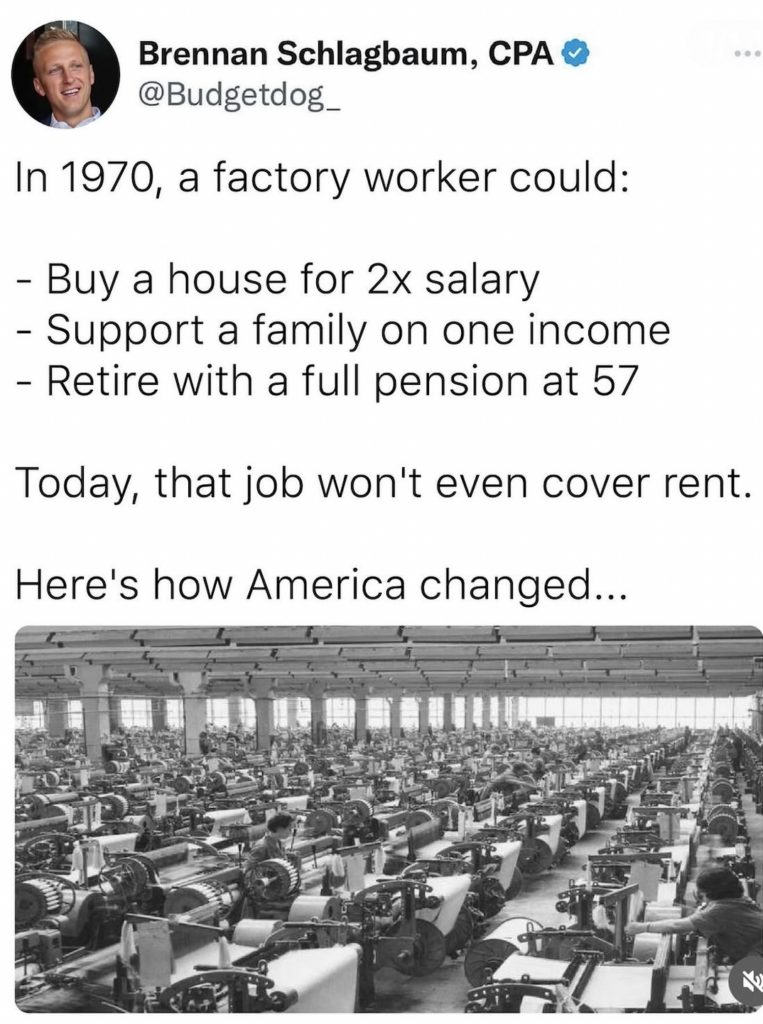
Older generations had it easier finacially. It’s wild to think that in the past a family of 5 with 2 teachers and 3 kids could own a 5 bedroom, 3 bathroom house, 3 car garage, go on vacations, have health insurance, have 2 cars, save for your kids college and save for retirement. Now to do that a family needs to bring in $400k a year. How many public school teachers do you know that make $200k/year?
When I was becoming an herbalist and dreaming of having a career as a practitioner from 2002-2010 (the years where my dreams were cemented) I guess I thought I’d have access to the type of childcare that I was providing as a $8/ for 2 kids nanny and a preschool teacher or a $1000/month live-in nanny to the super rich.
I assumed that I would have access to the type of preschools that I taught at as a preschool teacher. One that was affordable, quality, low teacher to child ratio, had good programming, and with plenty of openings. The preschool had 3 locations, was opening a 4th, and had plenty of staff. I knew prices would raise with time, but so would wages, right??
Since 1980, childcare has risen about 250%. Wages have risen 19-34% (adjusted for inflation).
It really is unprecedented for our life time. We are living in a modern gilded age and the robber barrons are the tech bros.
Scholarship, Lectures, Learning and Connecting
Back to my herbalist dream story.
Right away on my learning herbs journey, I feel in love with herbal and health scholarship. To me, that is the act of studying, learning, trying things, making medicines, plant identification, reading research, taking classes/going to conferences, putting ideas in practice and so forth.
A big way I learned was listening to herbal lectures and taking notes from a conference that Dina had gone to for years, and also looking at the corresponding lecture proceedings.
Dina did work study there and got free recordings, and also attended the conference for free, and had a cute little cabin to stay with other work study people, and I started to do work study as well. I grew my own cache of lecture recordings and notes.
In fact, I am going to that conference THIS year and doing work study. I am so excited! The first time I went was 2004…even though I haven’t gone every year, it’s cool to have an ongoing relationship with the conference experience.
Listening to herbal lectures and presentations really resonated with me, and it showed me another way to be an herbalist. From early on in my herbal learning, I too wanted to be some sort of herbal teacher.
When it comes to teaching, it’s not so much that I want to be on a stage behind a lecthturn presenting a slide show. I don’t love the idea of giving a lecture. It’s more so that I love learning and then dissemination information to others.
I consider blogging, making zines or other info products, offering workshops and classes and study groups and teaching at a conference as falling under this part of my dream herbalist career that I would call “creating a body of work, going deep with a topic and disseminating it to others”.
So there are the two ways I have always wanted to express myself as an herbalist. Now lets’s get into a discussion about feeling behind as an herbalist.
Herbalist as a Verb; Herbalist as a Noun
WHAT IS AN HERBALIST ANYWAY?
Let’s get semantic.
There are multiple ways you could define “herbalist”. In fact there are as many different expressions of what it means to be an herbalist as there are people who are an herbalist. Especially when you think of ‘herbalist’ throughout history and all over the world – the possibilities that “being an herbalist” holds is vast.
For me, I am going to present two ways to experience being an herbalist:
- Herbalist as verb
- Herbalist as noun(career)
Herbalist as a verb is experiential and relationship based. It’s the act of playing with herbs, being with them in a myriad of ways. Making medicine, learning, gardening, working with clients, formulating and so on. You can never be behind with this type of herbalism.
Herbalist as a noun is a role, a profession, a writer, creator. Herbalist the noun can be a business, through which you may have to file taxes and/or keep accounting notes. Herbalist the noun can objectively measure business transactions and investments, based on your cash flow – money in, money out. It’s more about being a business owner, entrepreneur, creator (using that modern verbiage). It’s a job. And you can certainly be behind in it.
The verb and noun herbalist can coexist, and they can exist separately.
Accepting a Non-Traditional aka Hard Path
Herbalist the noun aka job is a non-traditional income earning career path. Which is funny to say because herbalist the verb is an essential part of our humanity since the beginning of time. I’d say it’s even trans-human, it’s part of life on earth itself.
Being a herbalist as your career comes without a lot of built in financial power. We are never going to be guaranteed an easy way to make money and get clients. I mean, maybe some people are…maybe…depending.
Many of us know we are going to not have it easy, but we accept this career path because we love what we do, especially the “herbalist as a verb” aspects.
I always knew I would risk forgoing financial stability being an herbalist and acupuncturist. But It was hard for me to see the tru financial repercussions of that choice clearly, mostly because a) I didn’t know the hardships I would face in the future due to circumstances, personal and culturally and b) I was always able to pull SOME sort of money in and keep my business afloat in my early days 2002-2010 before leaving Minnesota for Oregon.
This is something I already mentioned, but seeing my mentor be busy and successful, which I KNEW was because she was in a small town and the only acu herbalist within 3 counties, and maybe because of the times (I’d imagine it’d be harder to be an acu herbalist even there now because of the economic instability widely affecting Americans now), really spurred my dreams along.
Can you imagine if she saw 6 clients a year for 10 years, not able to make a profit, not able to pay her acu school student loan bill? What would that have done to my ability to dream to be an herbalist? I wouldn’t have even worked with her, because she didn’t need any help non could pay for it.
Seeing a busy practice painted the “dream herbalist job” picture and influenced me greatly, regardless of what my logical mind knew of it being not possible for me to repeat in Portland. I knew it mentally, but it was never modeled to me.
I wasn’t a witness to a reality I would have to live.
Capitalism, community herbalism and other models
This saying comes to mind:
“You don’t hate Monday, you hate capitalism”.
There is essentially nothing wrong with being an herbalist, it’s the having to make it give us food and a roof as well as creature comforts via earning an income that is at odds here.
If we lived in times past or other places around the world without as much capitalism, you could be an herbalist without making it a profitably paying career. That is how herbalism existed the majority of the time on earth. A couple of my favorite herb books illustrate this well (Please click on the link to the descriptions to get more context):
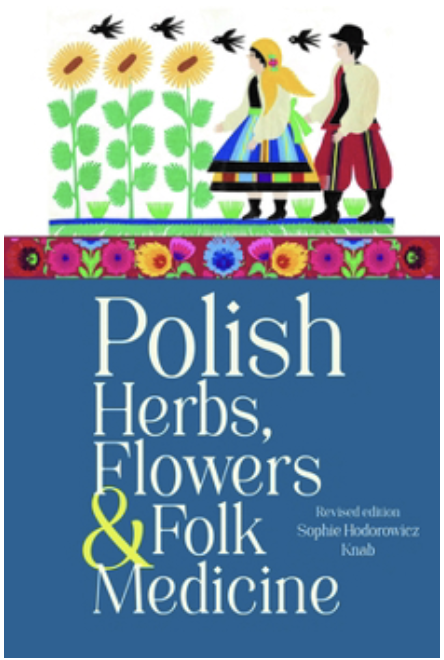
In Polish herbs, Flowers & Folk Medicine by Sophie Hodorowica Knab, the author talks about how girls were trained to be herbalists through their girl to teen years so they could provide healing of common ailments and complaints to their families, communities, and livestock. A girl was considered marriable when she knew all there was about herbalism.
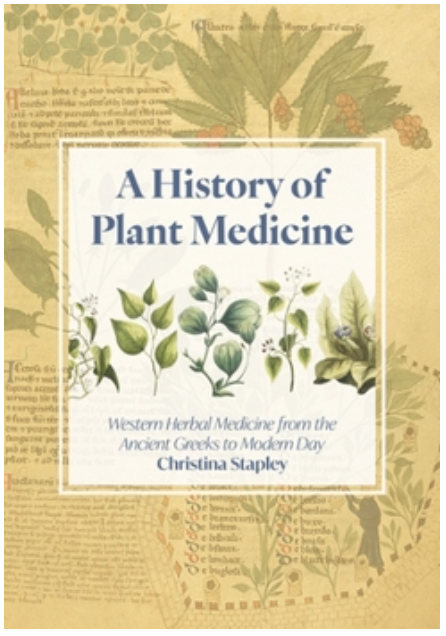
This book too, A History of Plant Medicine by Christina Stapley talks about how community health and healing in English history were addressed first by the monasteries, and then by the women of manors, again to provide herbs and healing to the families, communities, staff and livestock around her. This is one of my favorite herbal books…I highly recommend it!
There are so many examples of this the world over. Being paid in cash for medical services, which of course included herbal services, is a very new occurrence.
There is opportunity here for all sorts of aspects of community herbalism models and smaller family and home herbalism, which a lot of people do. I consider myself a family herbalist for sure, and I offer herbs to a friends and neighbors who ask me. Community acupuncture is amazing as well and much needed.
I think that’s great.
In Duluth I had an herbal CSA for a year, it was fun and I could see it becoming a bigger thing had I stuck to it. I hosted monthly herbal herbal study groups and monthly reproductive health study groups, too. There was a little community going on there for me. Maybe it was the place, the location, maybe it was the time. This was in 2007-2010, before social media isolated us so much.
Now, however, I feel lonelier than ever. I’ve been in Portland for 15 years and haven’t found a community around herbalism whatsoever.
The most practical and relevant thing to why I don’t participate in community herbalism is that I don’t know any community herbalism groups or herbal people at all in real life. I hardly know any herbalists, I have tried to meet others, host events, post the events to a 1500 member Meet Up page, make study groups, hold classes here in Portland, but it has been very challenging.
I have always felt I don’t quite fit into western herbalism spaces because I didn’t go to herb school, I wasn’t systematically trained in a certain philosophy or school of thought.
If I had attended an herb school, I could see myself fitting into a community there, like with a cohort of people, and possibly then working in an community herbal setting that arose from a certain herbal context and group of like minded people on the same educational and clinical trajectory.
When it comes to being an acupuncture practitioner, I am 100% better at being an individual practitioner. I learned this during community acupuncture clinic shifts in school; I truly sucked at community acupuncture – not that I couldn’t learn to be better if I dedicated myself and trained specifically in it, but it’s obvious it’s not my natural strength.
There’s another hang up about me theoretically participating in community herbalism and acupuncture models: I do things my own way. I am part Chinese medicine part clinical herbalism part folk herbalism, part body work/somatic even spiritual if the person I am working with wants that, I do a lot of moxa, I do ampuku (shiatsu belly work). I am overwhelmed by groups and suck at multi-tasking. To be fair, the community acupuncture clinics are actually quite relaxing to be in…it’s just not my thing at this moment.
Connection is essential to hebalists
Above when I said “I have another hang up about me theoretically participating in community herbalism models”, I had to add the word theoretically in there because beyond what I did in Duluth in the late 00’s, I have had no opportunities to even see or hear of community herbalism gatherings or groups.
This makes me sad, because it illustrates how lonely I have felt as an herbalist. Years ago I said, “If I would’ve known how lonely I’d be as an herbalist, I would’ve chosen a different path.”
This is not quite accurate. I would definitely chose to be an herbalist all over again, with the loneliness and the lack of financial viability. I may of done things differently, yes, but I would chose it.
What I really mean to say is: For me, it has been lonely being an herbalist and this makes me feel sad, because I want to connect with people in a meaningful way.
More than making a living, which is very important to me at this time, more than stability and a sense of safety, more than the need to express myself and create as an herbalist, the heart of why feeling behind as an herbalist affects me so much is that is it shows how I have missed connecting with people.
At first it was weird to admit the to myself.
To confess that I DO have a need to connect with people, and that me not being an herbalist who sees enough clients and who does not teach or share information with other like minded folk makes me feel lonely. It’s almost saying I am dependent on people to make me happy and whole, or I need people to make my career path fulfilling. It feels like I might be using people for my own gain, or am codependent.
Funny that I go right into this assumption that I need to be super independent and any need for community is some sort of pathology! Ha! talk about toxic modern western individualization ideas. Heaven forbid I admit I am a human and like all humans, I too am a social creature, and that we are stronger as a community.
Lack of connection is painful
There’s a saying that trauma isn’t the absence of harm, but an absence of connection.
I’d like to share 3 paragraphs from an article called Trauma is Real. But Connection Can Heal by Gary G. Abud Jr, written in 2017.
“Pain is more than a metaphor, as UCLA Neuroscientist Matthew Lieberman found in his research. Social separation in infants causes pain and triggers a physical response. Acetaminophen has been shown to alleviate the pain of a broken heart just like it can ameliorate back pain. Years after a traumatic event, one is more likely to remember the pain associated with a lost loved one than the pain of a broken arm. And, like Cloud, Liberman also acknowledges that connection with others is among our greatest human needs.”
Which to me illustrates that there IS a pain of social isolation. I knew it, I felt it, I’ve heard about it for years, but it was nice to see it accepted as fact. It’s validating. And it makes social connection worth fighting for, nurturing, protecting.
“For many who experienced financial struggles and other ACEs in the past decade, there was a high level of shame. The shame associated with social and emotional pain breaks down connection with others and isolates us from each other. Brene Brown’s model of interpersonal connection spans a continuum, ranging from empathy (most connected) to shame (least connected.) According to her shame-resilience curriculum, vulnerability is the key to helping us connect, which in turn yields empathy, and can overcome the destructive impact of shame. So understanding and empathy from a caring adult can help contextualize symptoms of trauma as maladaptive behaviors, not misconduct.”
This bit about shame related to financial struggle is part of the reason I want to talk about how hard it is to be an herbalist as a job nowadays. If we aren’t actively seeking to reverse the shame cycle, there’s a pretty big chance we will stay there and separate ourselves from others and contribute to even more loneliness.
This one below isn’t relevant to my story but I found it to be very interesting and health related, so I share it here.
“ACEs have more than an emotional impact on children, they change the brain, affecting memory, cognition, and learning capacity. Some children born during the Great Recession have been found to have deficiencies in nutrients that are key to cognitive development and mental health – such as folate, choline, and omega-3 fatty acids – as a result of poverty, food insecurity, and parents inability to purchase costlier whole foods. Stanford Psychologist Hilit Kletter, points out that this might lead kids to act out, exhibit big emotions, or struggle with impulsivity in school, which gets them in trouble or is mistaken for ADHD.” Trauma is Real. But Connection Can Heal – Gary G. Abud, Jr. 2017
To think this article came out in 2017 when inflation was not as high, housing was more affordable, wages and employment were stable, and Covid was not a thing. They were refering to the Great Recession affects of childrens mental and physical health…just think what COVID and subsequent inflation is doing to children’s health once again.
And here is a little quote from Johann Hari’s book Lost Connections
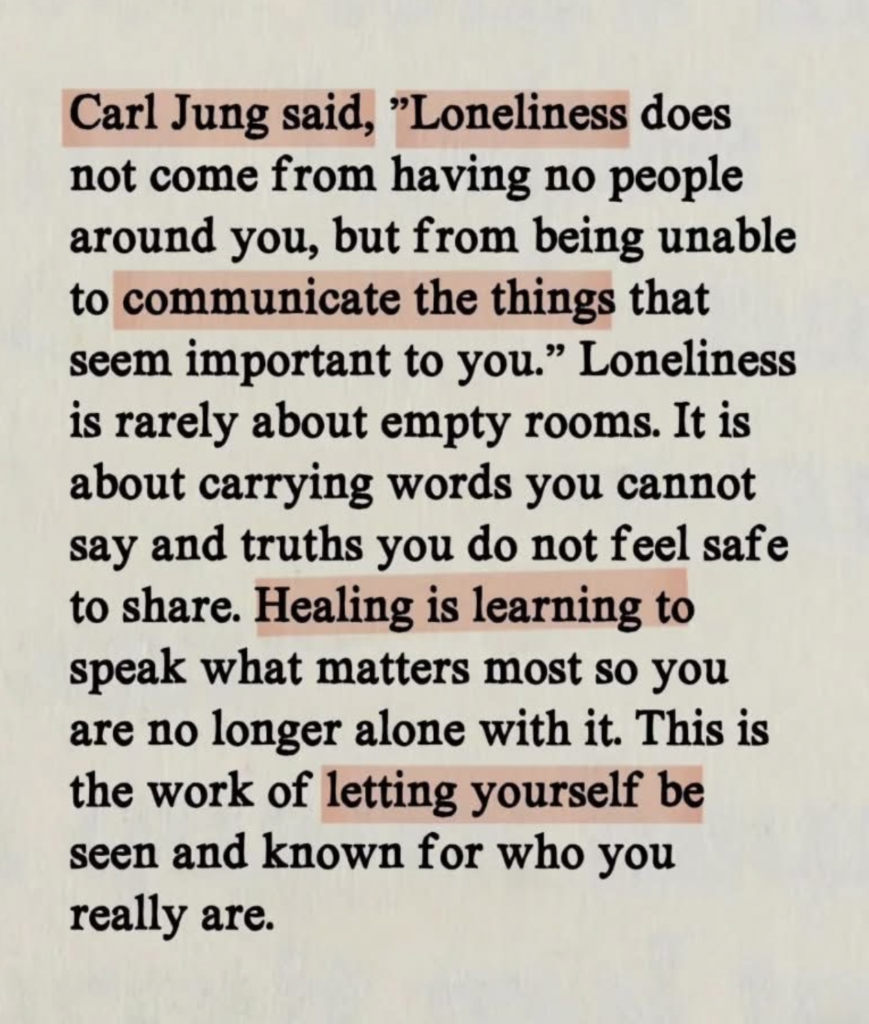
“Loneliness is not the physical absence of people. It’s the sense that you’re not sharing anything that matters with anyone else”
Continuing on with the quote brigade, here are 3 quotes that stood out to me from Rosemary Gladstar’s book The Generosity of Plants: Shared Wisdom from the Community of Herb Lovers.
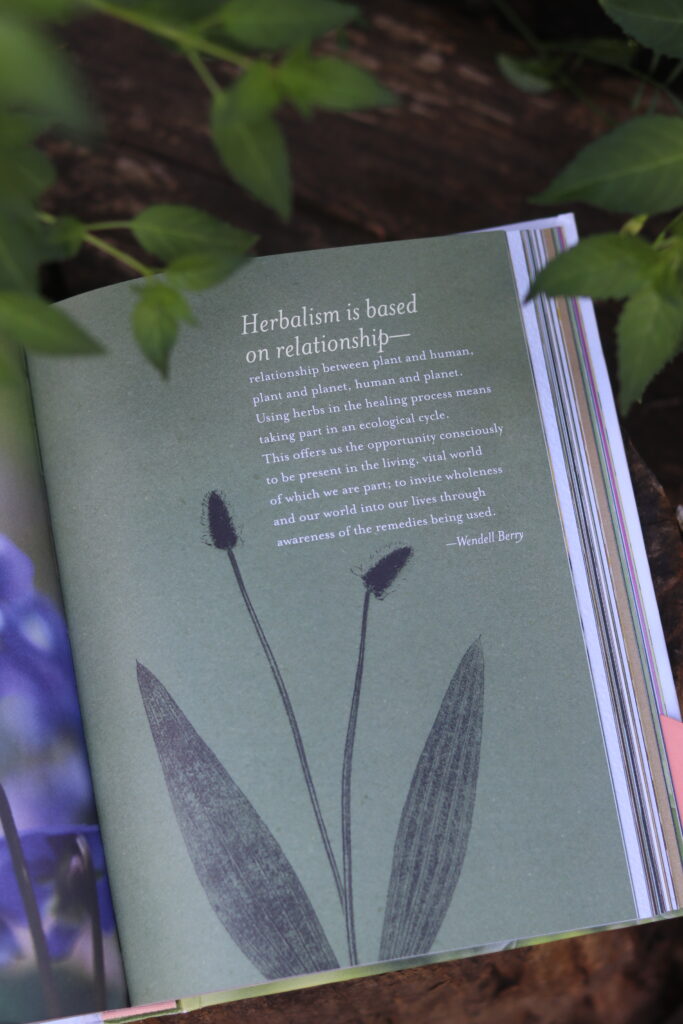
Herbalism is based on relationship– relationship between plant and human, plant and planet, human and planet. Using herbs in the healing process means taking part in an ecological cycle. This offers us the opportunity consciously to be present in teh living, vital world of which we are part; to invite wholeness and our world into our lives through awareness of the remedies being used.
- Wendell Berry
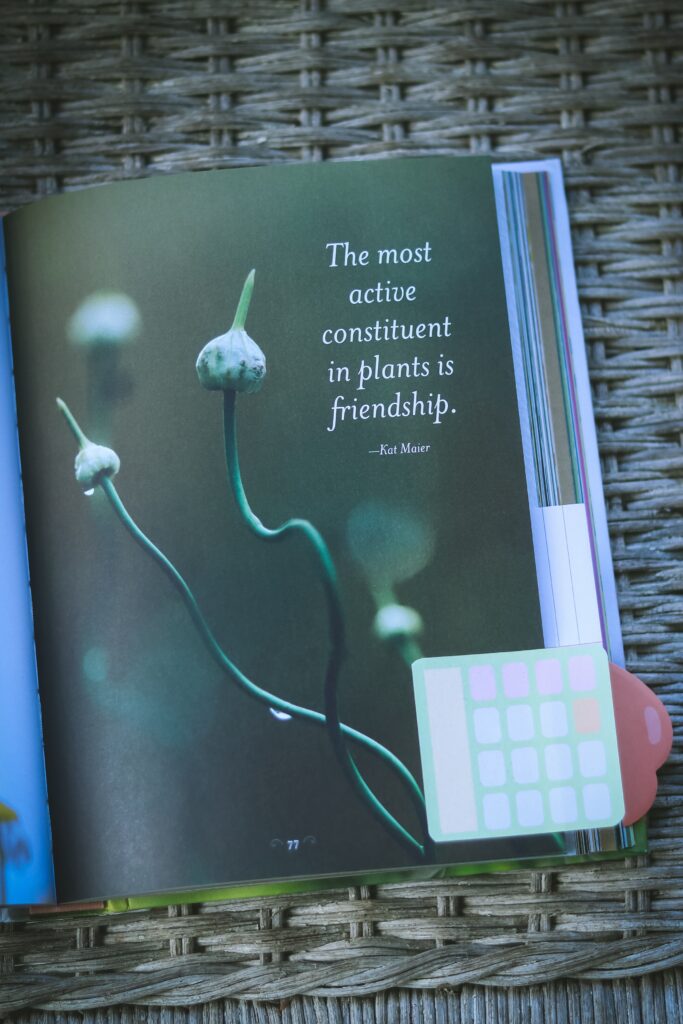
The most active constituent in plants is friendship. –Kat Maier
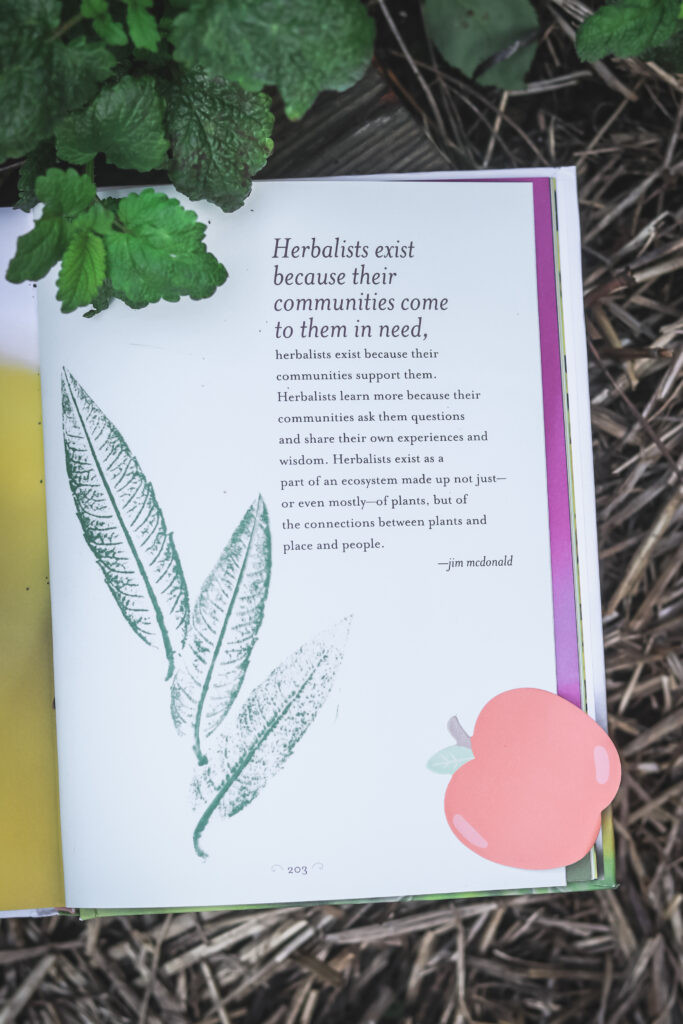
Herbalists exists because their communities come to them in need, herbalists exists because their communities support them. Herbalists learn more because their communities ask them questions and share their own experiences and wisdom. Herbalists exists as a part of an ecosystem made up not just –or even mostly–of plants, but of the connections between plants and place and people. –jim mcdonald
Are you needed and supported if you have very little business? In Conclusion…
I want to end this for my own sake by affirming that I have hope.
**I do certainly see where I am needed. And I see where I am supported. It’s just not to the level I would’ve hoped. I’m like 5% supported and needed.
**I contribute in unseen and unheard ways. Yes, less people see me. Less community exsists around me, but it is there nonethless.
**Many of the reasons I feel unheard/unseen and unsupported/unneeded are A) out of my control (like being chronically ill, not being able to move or afford childcare) and B) in my control but I am unwilling to engage with. Like I do not want to “build a following” on Instagram, I don’t have a podcast, I don’t teach classes, I don’t have an engaged internet marketing funnel. A lot of these things I just listed as me “choosing not to” I also feel are just not possible, but the truth remains if I kept at it, I could find a way.
Still, even with all this being true, this sounds cheesy but I am sad in my heart that I don’t have community around me. The pain of isolation is real. There is no “logic-ing” my way out of it.
When I feel guilty or self-conscious about “complaining” about how my career didn’t go the way I hoped, or that I don’t have herbal community, I remember that from 2002-2025 I trudged along with a smile on my face, waiting and hoping for my dream career to arrive. I felt grief and loss and especially loneliness many times along the way, but never as a directly as now.
It’s okay to have 10 months of deep questioning, examination and exploration of a sadness I didn’t even know was there. For 23 years I never stopped to think how I felt, I just let the hope and even delusion that things were fine, and the fantasy that someday soon things will change carry me forward.
I hate to leave on a Debbie Downer note, but I see this exploration of sadness as a constructive.
I am in a surrender/acceptance/transformation cycle, and sitting with the uncomfortable and ugly is a part of that process.
Best of luck on your journey, wherever you are.
Take good care,
Celia